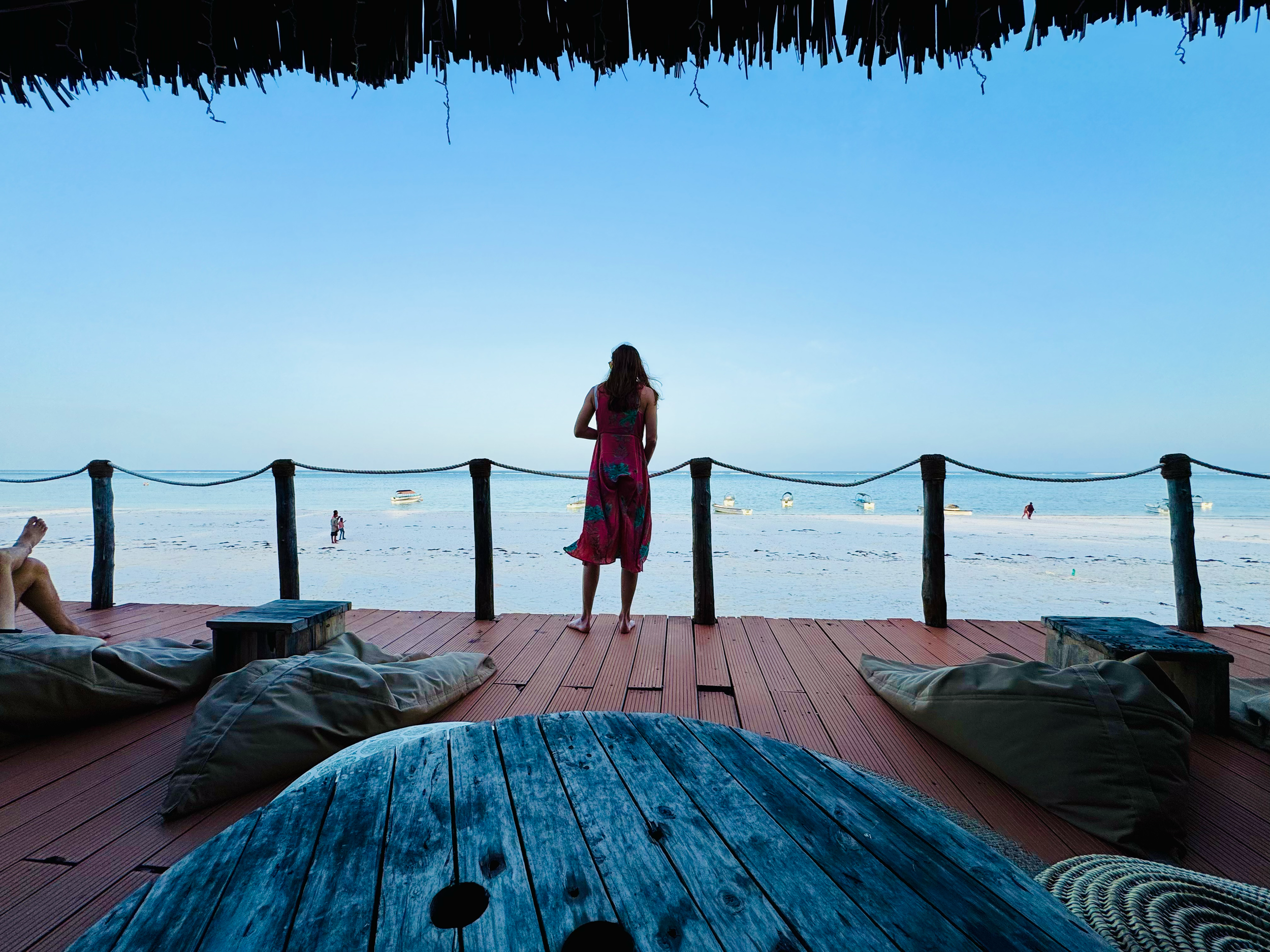

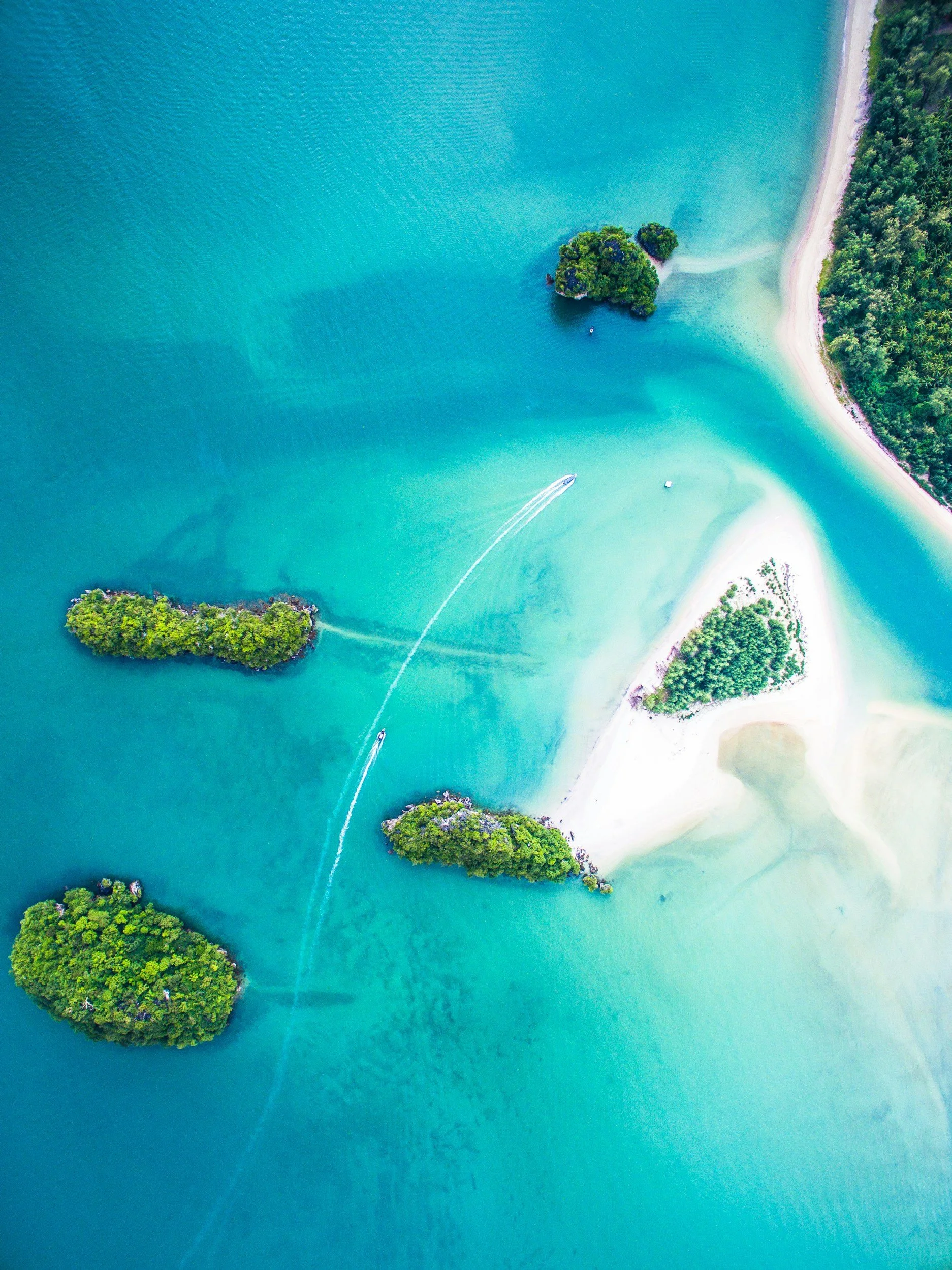
Zanzibar
Zanzibar is an archipelago off the coast of Tanzania, in the Indian Ocean.
The name covers several islands, but most people mean the main one, Unguja, when they say Zanzibar. The next largest is Pemba to the north, known for its diving, and Mafia sits further south, with a marine park and whale sharks between October and March. Unguja is where the beaches and the flights from the mainland are, so it is where most trips go. It sits about six degrees south of the equator, so it is warm all year.
The island's history is a trading history. For centuries it was a hub of the Indian Ocean trade in spices and, until the nineteenth century, in slaves, and it drew Arab, Persian, Indian and African settlers who each left a mark on the language, the food and the buildings. In 1840 the Sultan of Oman moved his capital from Muscat to Zanzibar and pushed the island into clove growing, which is why it is still called the Spice Island. The local language is Swahili, and the island is predominantly Muslim.
That history is easiest to see in Stone Town, the old quarter of Zanzibar City on the west coast and a UNESCO World Heritage Site since 2000. It is a maze of coral-stone buildings, mosques and carved wooden doors, and it is still lived in rather than preserved as a museum. Most trips give it a night or two at the start or the end.
The beaches are the reason most people add Zanzibar to a safari, and they sit around the edge of the island on white coral sand. Which coast you choose matters more than which hotel, mostly because of the tide, and that is worth understanding before you book. This page covers where the good stretches are, what each is actually like, and the kind of places we book.
Getting there is straightforward. Zanzibar is a 75-minute flight from Arusha and a 2 to 3 hour flight direct from the Serengeti airstrips at Seronera, Kogatende and Grumeti, so it adds on to the end of a safari without a return to Arusha. Four to seven nights is the usual length.
The tide, first, because it decides everything
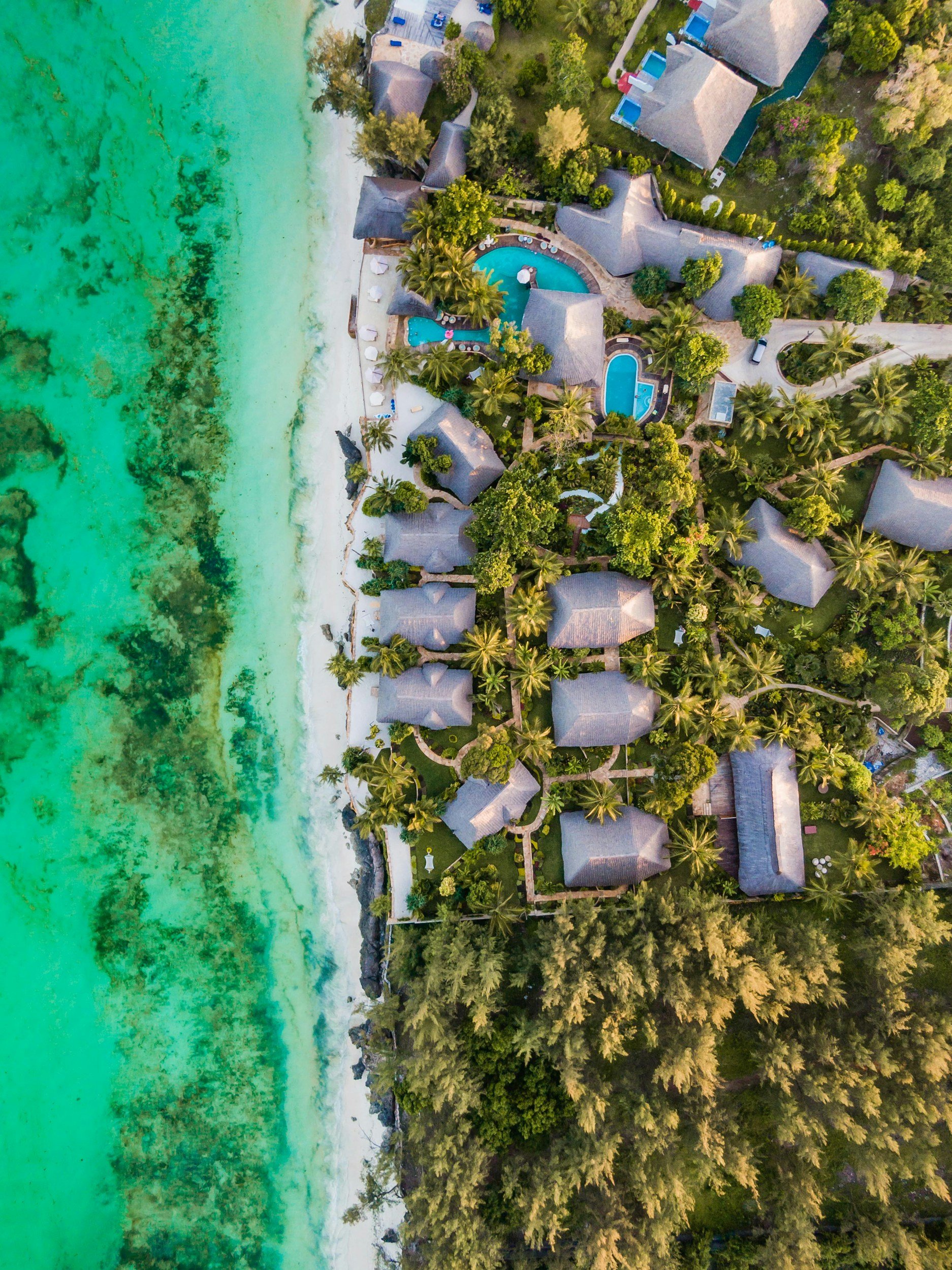
Most of Zanzibar's east and southeast coast sits on a wide, shallow reef shelf. At low tide the sea withdraws several hundred metres, in places close to a kilometre, and leaves exposed sand and reef flat. You cannot swim from the beach at low water. It comes back the same distance at high tide. This is not a flaw in a particular hotel, it is the whole eastern coast, and it runs on a daily cycle you can read off a tide chart before you book.
Two places on the island do not do this. Nungwi and Kendwa, at the northern tip, have a small tidal range and are swimmable from the beach through the day. If swimming whenever you like is the point of the trip, you go north. If you would rather have a quiet beach and plan your swims around the tide, the east and southeast are better, and there is a tideless pocket in the southeast around Michamvi worth asking about.
Low tide on the east coast is not dead time. The exposed flats are where the Paje and Jambiani seaweed farmers work, the hard sand is firm enough to cycle or walk for miles, and sandbanks surface for a few hours that are gone by evening.
The coasts, and who each one suits
North: Nungwi and Kendwa. The only all-day swimming on the island. Also the busiest and most built-up, with the most restaurants, bars and beach clubs. Choose it for reliable swimming and an active scene. Avoid it if you want quiet.
Southeast: Paje, Jambiani, Bwejuu. Long white-sand stretches, tidal. Paje is the kitesurfing centre and the liveliest of the three for dining. Jambiani is quieter, with the seaweed farms and cultural visits nearby. Bwejuu is the least developed, good for long walks and seclusion. All three are within a short drive of each other, so you can stay on one and eat or ride along the others.
East: Pongwe and Michamvi. Pongwe is a small sheltered cove, calmer water than the open southeast beaches and good at high tide. Michamvi sits on a peninsula that hooks back west, so it is the one part of the east coast where you watch the sun set over the water rather than behind you.
Northeast: Matemwe. The base for Mnemba Atoll, facing the reef. More developed than it was, tidal like the rest of the east.
Kitesurfing, if that is the draw
Paje and Jambiani are among the better kitesurfing spots in the Indian Ocean, on a shallow reef-protected lagoon. Two wind seasons: Kusi from roughly June to September brings stronger southeast winds of about 15 to 25 knots, suited to intermediate and advanced riders; Kaskazi from about December to March brings gentler northeast winds around 12 to 20 knots, better for beginners. April, May, October and November are the least reliable.
Snorkelling and diving
Mnemba Atoll, off Matemwe, is the best-known site and reached by boat. It can be busy in peak season, and reef condition at the shallow day-visitor sites varies year to year, so ask us about current conditions before you plan a trip around it rather than assume the postcard.
Chumbe Island, a short boat trip from Stone Town, is a protected reef that has been managed as a marine reserve for close to 30 years and caps visitors at around 20 a day. It holds over 500 reef fish species. It runs as a day trip or an overnight in a small eco-lodge.
For serious diving, Mafia Island to the south has a marine park with reefs mostly under 30 metres, and whale sharks gather in its waters from around October to March. Pemba, north of Zanzibar, has steep wall dives at sites like Misali for experienced divers. Both are separate islands with their own flights, better as their own leg than a day trip.
Water activities, snorkelling, diving and dhow trips are arranged on the island through our local contact and paid there directly, so they are not built into the safari price.
Stone Town
Many clients trips start or end with a night or two in Stone Town, the island's old quarter and a UNESCO World Heritage Site. It is worth it for the history and the contrast with the beach. It is a Muslim town, so cover shoulders and knees walking through it; beachwear is fine at the resorts, not in town.
Getting there and the practical bits
Direct flights run daily from Arusha and from the Serengeti airstrips. One point worth knowing: flights from Zanzibar to the Serengeti run at roughly half the price of the reverse, so starting on the beach and flying to the bush afterward can cut the internal flight cost. We arrange the flights and transfers either way.
Two mandatory costs to budget for. Since October 2024 every visitor must hold Zanzibar's inbound insurance policy from the Zanzibar Insurance Corporation, currently 44 USD per adult and 22 USD per child, valid up to 92 days, bought online before you travel; you show a QR code on arrival, and it is required even if you already have your own travel insurance. Separately, hotels collect an infrastructure tax of a few USD per person per night on behalf of the Zanzibar authorities.
Our Partners
We have relationships with lodges and hotels across on the island. Give us your brief, or even a rough idea of what you have in mind, and we'll tell you where the best place for you is.